-JAMA Neurology, 2014 December
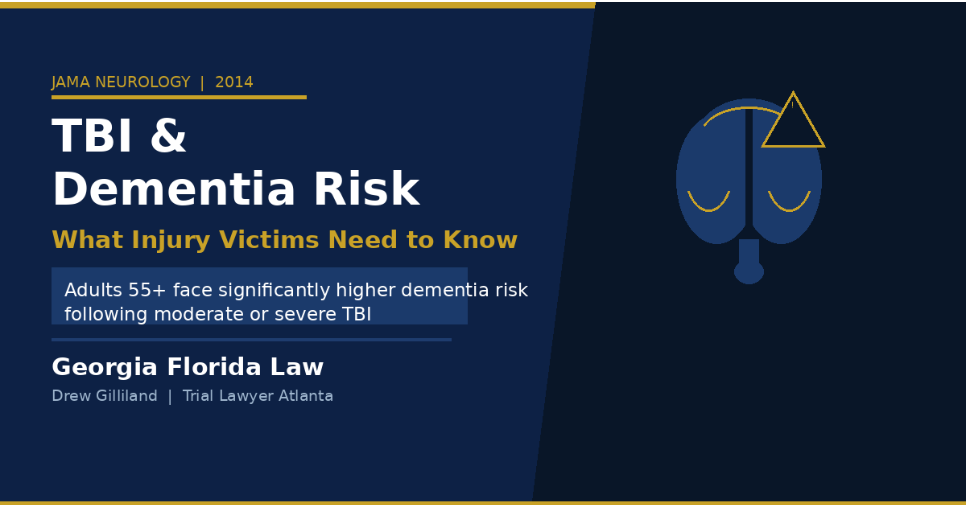
· Among patients evaluated in ED or impatient settings, moderate/severe TBI at age 55 or older or mild TBI at age 65 or older increases risk of developing dementia. Younger adults may be more resilient to effects of mild recent TBI than older adults.
· According the Centers for Disease Control (CDC), Americans aged 55 and older account for more than 60% of all hospitalizations for TBI, with the highest rates of TBI-related ED, impatient visits, and deaths occurring among those aged 75 and older.
· The above number likely underestimates the population prevalence of TBI given that many patients with a TBI never seek medical attention.
· The authors hypothesized that, while a recent TBI of any severity would increase short-term risk of dementia across all ages, the risk would be greater with increasing TBI severity and increasing age due to increasing brain vulnerability.
· Those with TBI were more likely to be diagnosed with dementia compared to those who suffered non-TBI trauma.
· Average time from trauma to dementia diagnosis was 3.2 years and was shorter in the TBI group compared to the non-TBI trauma group.
· Moderate/severe TBI was associated with increased dementia risk across all ages, while mild TBI became a relatively more important dementia predictor with increasing age.
· A single TBI was associated with significantly increased risk of dementia compared to a single non-TBI traumatic injury.
· Authors found an association between TBI sustained in middle-aged and older adulthood and the development of dementia.
· Moderate or severe TBI was associated with risk of dementia in patients 55 and older, while mild TBI was associated with risk of dementia among older patients.
· Authors found that mild TBI sustained at age 65 plus or moderate/severe TBI sustained at age 55 plus may significantly increase risk of developing dementia. Given the high rates of TBI in the population, primary prevention of TBI – which in this study was overwhelmingly (66%) due to falls – is critical.
· Major theories regarding the mechanism linking TBI and dementia include (1) the triggering of a progressive neurodegenerative cascade, (2) the acceleration of an established neurodegenerative cascade, and (3) a static brain injury that reduces cognitive reserve.
View our PDF: TBI Literature – Dementia Risk after TBI