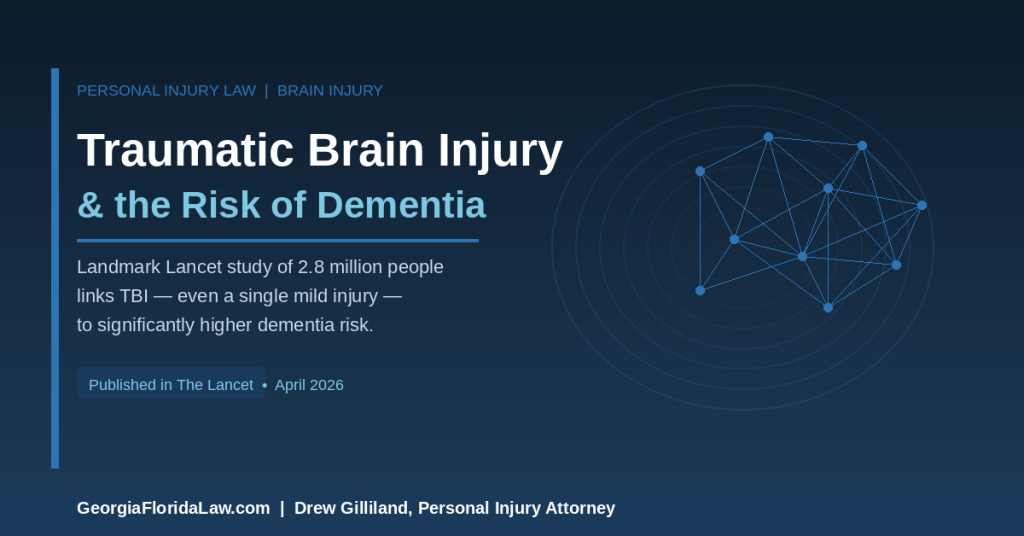
Long-Term Risk of Dementia Among People with Traumatic Brain Injury in Denmark: a population-based observational cohort study
- Published in The Lancet.
- Summary: Authors investigated the association between TBI, including severity and number of TBIs, and the subsequent long-term risk of dementia.
- Methods: Authors did a nationwide population-based observational cohort study in Denmark using information on citizens from national registries.
- Findings: The fully adjusted risk of all-cause dementia in people with a history of TBI was higher than in those without a history of TBI, as was the specific risk of Alzheimer’s disease. The risk of dementia was highest in the first 6 months after TBI and also increased with increased number of events. Furthermore, TBI was associated with an increased risk of dementia in people with TBI than in individuals with a non-TBI fracture not involving the skull or spine. The younger a person was when sustaining a TBI, the higher the HRs for dementia when stratified by time since TBI.
- Interpretation: TBI was associated with an increased risk of dementia both compared with people without a history of TBI and with people with non-TBI trauma.
- Dementia affects about 47 million people globally and is a major cause of mortality disability.
- TBI is a common worldwide and associated with substantial short-term and long-term disabilities and costs.
- The risk of dementia, and specifically Alzheimer’s, was significantly higher in people with TBI versus those with no history of TBI, and this significant difference was also present when comparing people with TBI with people who had non-TBI fractures.
- The risk of dementia was highest soon after TBI and increased with the number and severity of TBIs.
- Each TBI was classified as mild or severe. The definition of “mild” in the same definition as used by the American Congress of Rehabilitation Medicine and has been used in previous population-based TBI studies.
- In this nationwide population-based observational cohort study of nearly 2.8 million people aged 50 years or older, a history of TBI was associated with an increased risk of all-cause dementia and Alzheimer’s disease compared with those with no history of TBI.
- Compared with people without TBI, the risk of dementia was increased even after mild TBI, particularly within the first 4 years after injury.
- In addition to the direct pathophysiological consequences of TBI on the brain, TBI is associated with higher rates of depression, alcohol abuse, and sedentary lifestyle, which are all risk factors for dementia.
- Because of the national healthcare system in Denmark in which all citizens are offered free health services, the influence of socio-economic factors on health-care-seeking behaviors is minimized.
- The database did not contain diagnoses on TBIs treated by general practitioners, which have been found to be less reliable than those made in an emergency room or hospital setting. The absence of this data most likely contributes to underestimation of the association between TBI and dementia.
- A history of TBI was associated with an increased risk of dementia versus no history of TBI and versus non-TBI trauma. The risk was highest among people with multiple TBIs and those who sustained a severe TBI, but the risk was significant even after a single mild TBI and remained high for many years after injury.